AI Driven App Development
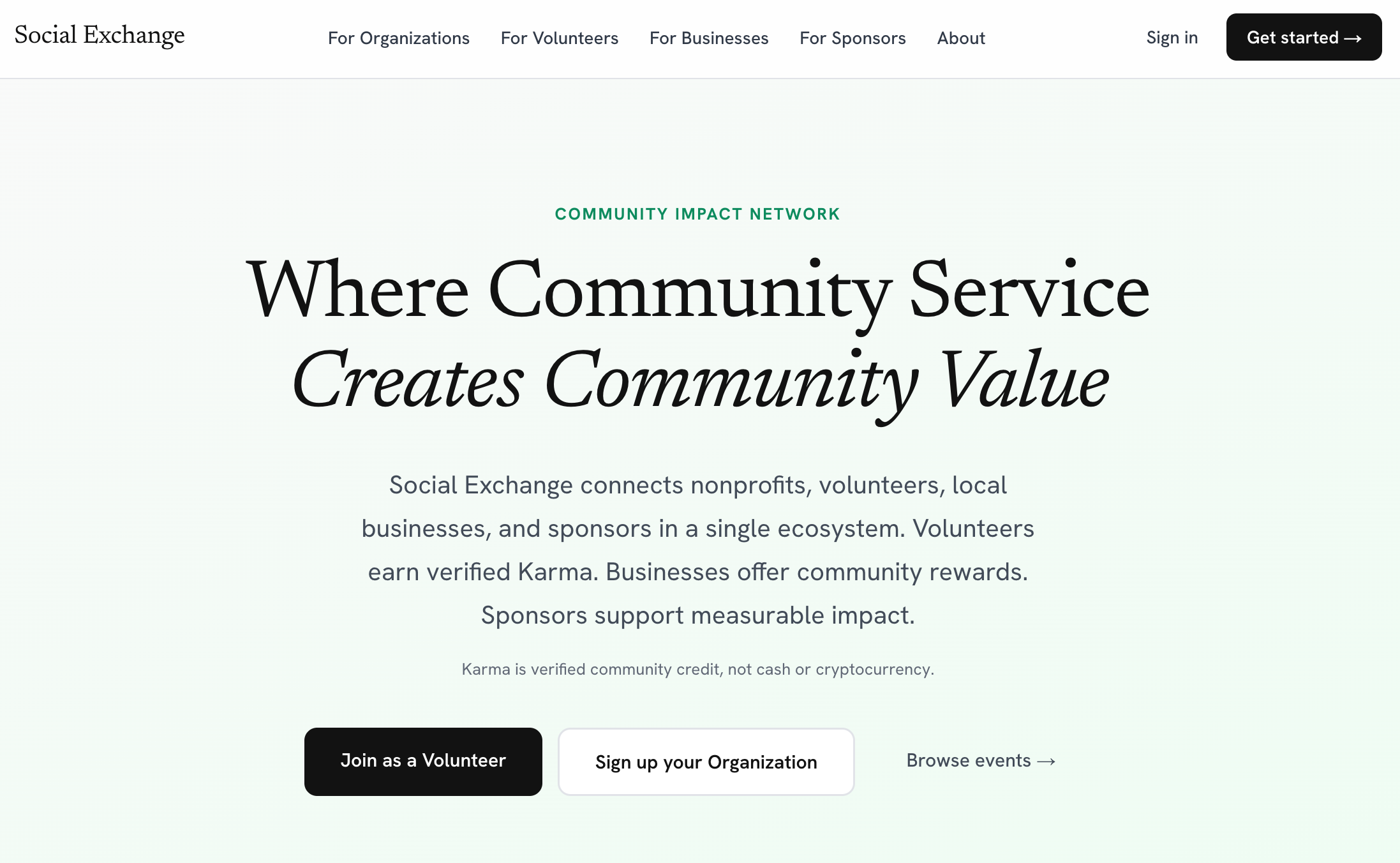
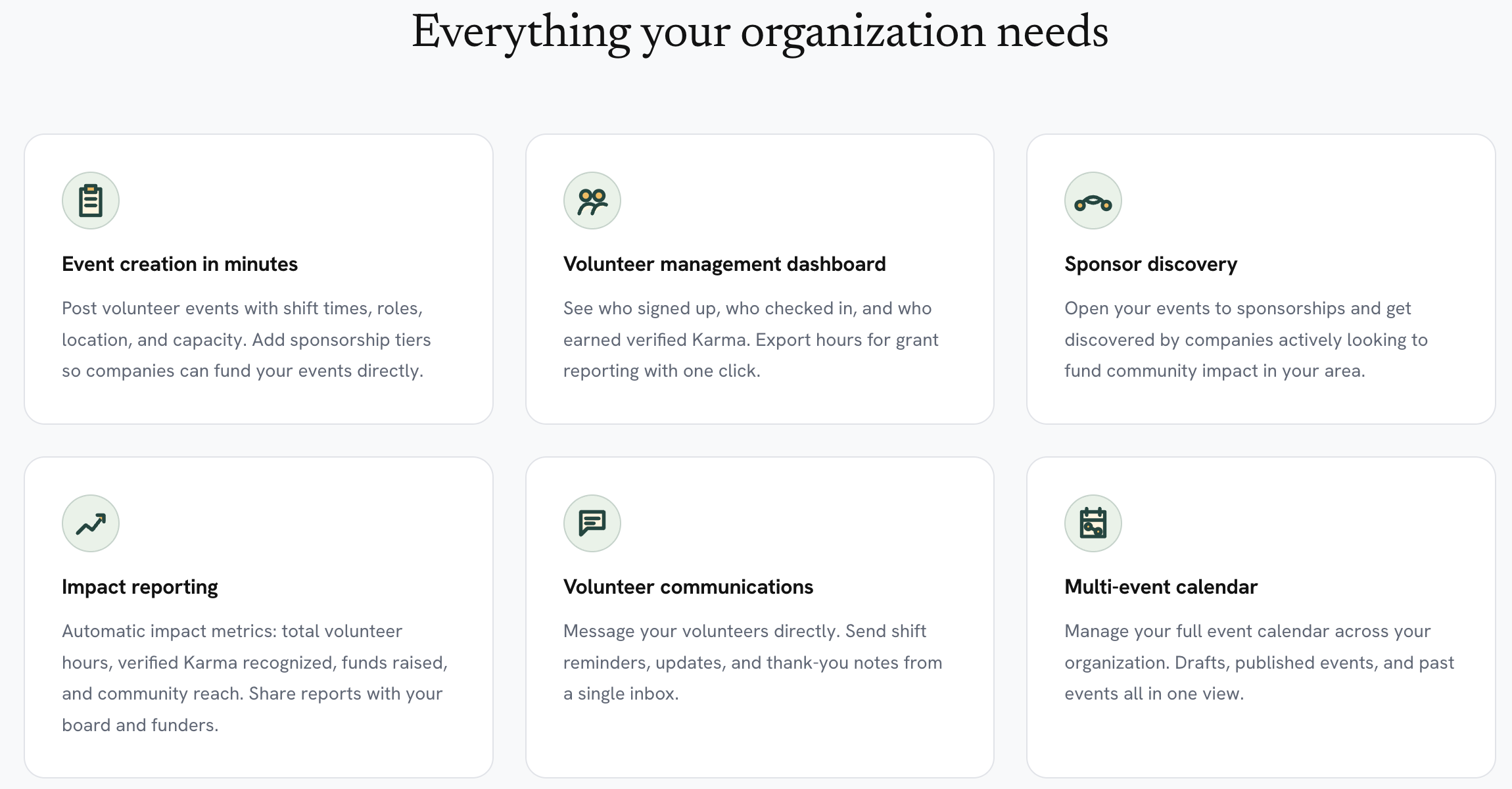
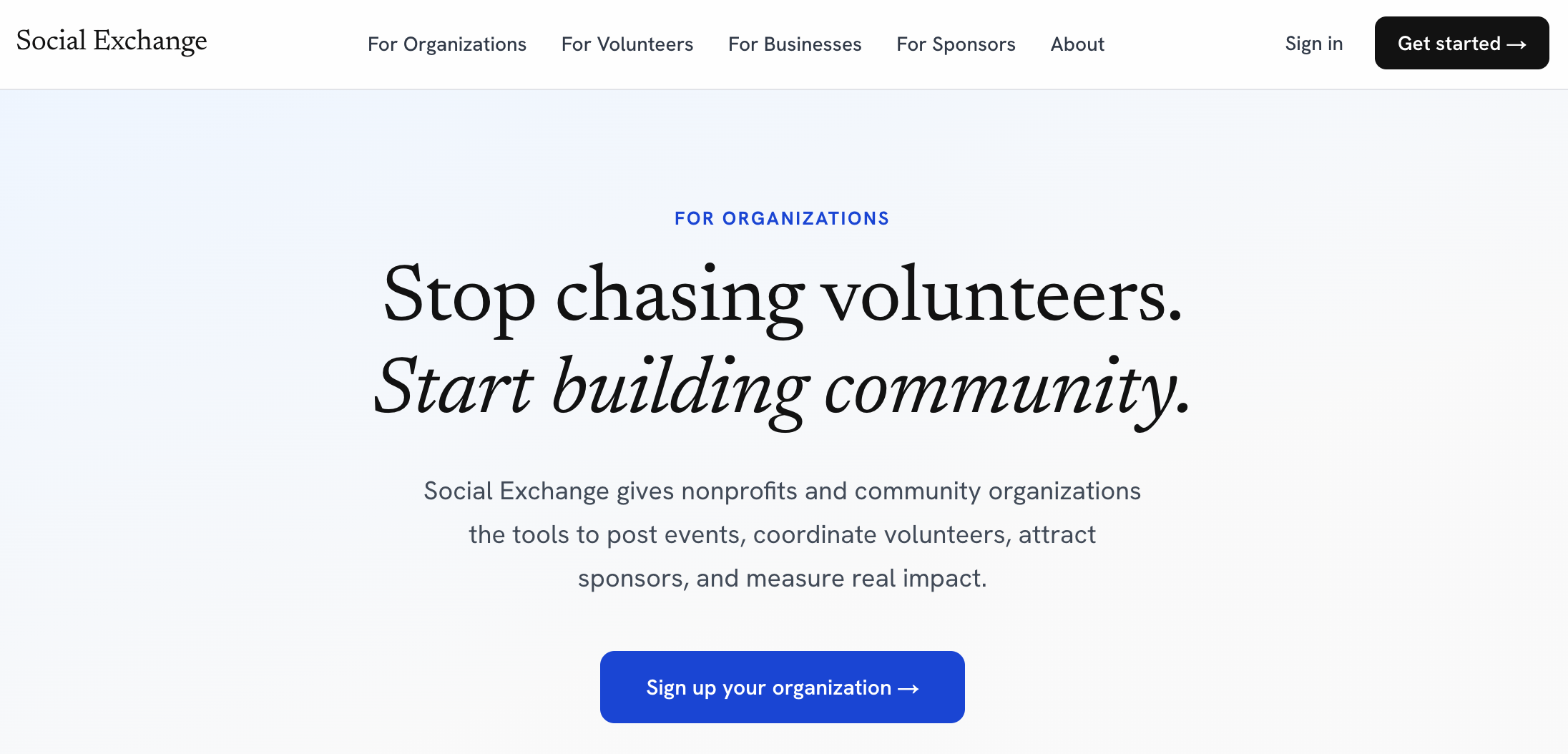
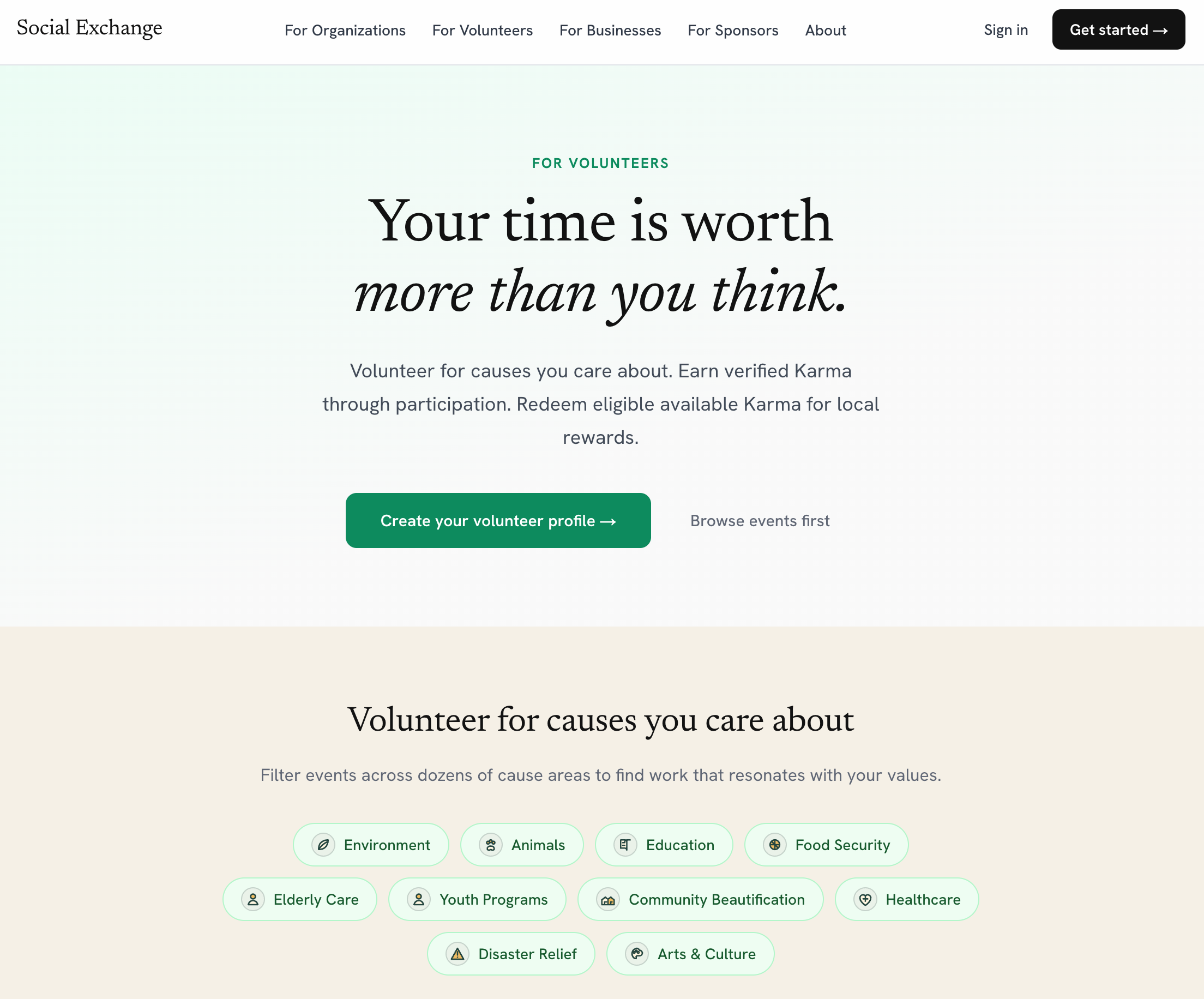
In 2024, after participating in a volunteer event, I began thinking about an idea that would eventually become Social Exchange: a community platform where verified volunteering earns “Karma” that can be redeemed for rewards from local businesses.
The idea stayed in the back of my mind for some time. I discussed it with developers, consultants, and potential investors to determine whether it was worth pursuing. I believed it could provide real value, but getting other people behind it proved difficult.
Social Exchange would be a two-sided marketplace, bringing together volunteers and community organizations on one side and local businesses on the other. Platforms of this kind are notoriously difficult to launch. You need to attract multiple groups at the same time, give each one a compelling reason to participate, and create enough activity for the platform to become useful.
The developers and investors I spoke with were understandably hesitant. Some were quick to dismiss the idea altogether.
But I still believed in it.
The problem was that I didn’t know how to code, and I didn’t have the funds to finance a significant development effort. What I did have was several years of experience experimenting with AI, product management methodologies, and time.
I began using ChatGPT after OpenAI introduced it with GPT-3.5. At first, I used it for relatively simple tasks: summarizing emails, drafting responses, and helping me develop blog posts. As I became more comfortable with the technology—and more aware of its limitations—I gradually began using it for more substantial work, including drafting and reviewing product requirements, vendor agreements, and knowledge-base documentation.
During the summer of 2025, I was creating visuals for a product requirements document when a question occurred to me: Could I give ChatGPT the requirements and ask it to create the visuals?
The answer was yes. The images weren’t perfect, but they were accurate enough to communicate the product concept. I was excited by this new way of working and shared the results with my web developer.
He responded with something along the lines of, “Why don’t you use Replit? You’ll get high-fidelity prototypes and better results.”
So I shifted my attention to Replit and began experimenting.
Within minutes, I was turning product documents into clickable prototypes that I could present to clients for feedback and share with developers for effort estimates. Instead of relying only on written requirements and static images, I could let people interact with an early version of the experience.
The next question came naturally: Could these prototypes connect to real data?
Once again, the answer was yes. I experimented with controlled connections to CRM systems, databases, and Google Sheets. The prototypes could read and update information, allowing me to explore how complete workflows might function—not just how their screens might look. These experiments also made it clear that permissions, security, backups, and careful testing become increasingly important once a prototype begins interacting with real systems.
As the work evolved, I moved from Replit to OpenAI’s Codex and then to Anthropic’s Claude Code. What began as an exercise in prototyping gradually became the development of fully functional web applications.
That progression gave me a new way to approach Social Exchange.
I rolled up my sleeves and described the idea to ChatGPT and Claude. I ran lengthy question-and-answer sessions to challenge my assumptions and develop a more complete product requirements document. Then I divided the project into phases so I could build it incrementally.
With the help of AI, I began building the app I had imagined.
I worked on it whenever I could find a few moments—adding functionality, improving existing features, testing workflows, reviewing the results, and moving the product forward one step at a time.
I may not have written every line of code unaided, but this wasn’t a matter of simply pressing a button and receiving a finished application. I still had to define the problem, make product decisions, evaluate the output, identify failures, and keep refining the experience.
AI didn’t simply help me code an app. It changed the economics of pursuing an idea that previously required more money, technical expertise, and outside support than I had.
Social Exchange is one of many app ideas I have explored, but it is the first for which I purchased a domain and began developing a business plan. That makes it special to me—not only as a product, but as proof that ideas once considered too difficult or expensive to pursue can now be tested in entirely new ways.
The project is still evolving, and there is plenty left to learn and build. If the idea resonates with you, I invite you to explore Social Exchange, share your feedback, or follow along as I continue documenting the journey.
Contact
I’d love to hear what you think about the Social Exchange app, or the process I followed.
Please do not hesitate to get in touch.